

Picture Of A Gas Pump
Today, the gas pump seems a mundane part of everyday life. Drivers go to the station, expect a few moments to fill their tanks and then caput on their ways. This was non e'er the case, still. Early on gas pump applied science wildly changed life for the improve, making everything from lighting a stove to powering a car that much more user-friendly. Equally the gas pump became a fixture in life, companies began to experiment with new ways to increase its helpfulness equally well as its appearance. Follow the list beneath to run across the various technological innovations that made the gas pump what it is today as well equally some standout designs from previous eras.
12. Stainless Steel Gas Pumps
Year Designed: c. 1950
Designer: Multiple
Bonus Fact: Had multiple options for fuel and services
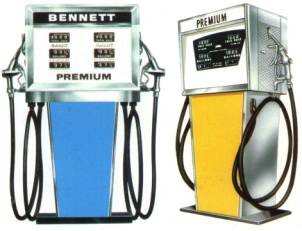 photo source: Jack Sim, "An Illustrated Guide to Gas Pumps," 2002
From the 40s on, the gas pump'due south general design has had a chip of a "makeunder." Gas pumps from the 50s and 60s featured stainless steel tops on tapered, monochrome bottoms. While the design was simpler, the offerings expanded. Users could at present choose between different kinds of gas and services for their cars– a convenient feature that has remained in gas pumps.
eleven. Low Profile Meter Pumps
Year Designed: c. 1945
Designer: Multiple
Bonus Fact: Less intricate than pumps from the 1930s
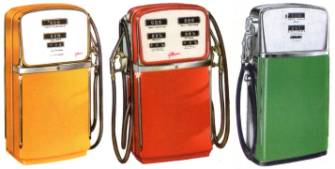 photo source: Jack Sim, "An Illustrated Guide to Gas Pumps," 2002
Following Globe State of war II, auto companies began designing and selling cars that rested lower to the ground than before models. As a event, older gas pumps were as well tall for drivers to read the reckoner meter from the car. New, shorter gas pumps arrived on the scene. They were a lot less intricate than older models also, featuring simpler designs and square bodies.
x. Wayne Figurer Meter Pumps
Twelvemonth Designed: 1934
Designer: Wayne Co.
Bonus Fact: Rid of the clock-fashion ticker measurement system
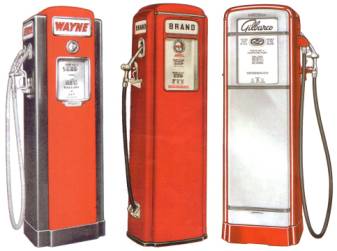 photo source: Jack Sim, "An Illustrated Guide to Gas Pumps," 2002
The Wayne Company's computer meter invention in 1934 led to more technological and aesthetic changes in the gas pump. Rather than a ticker that showed measurements equally if on a clock face, the figurer meter displayed numbers in real time on the meter face. This made it fifty-fifty easier to determine how much gas the driver was buying and other companies before long adopted the mechanism. Additionally, the gas pump went through a beauty makeover with the rise of art deco styles. Companies added new motifs, designs and colors that brand vintage gas pumps collector'due south items today
9. Wayne Clock Meter Gas Station Pump
Year Designed: 1932
Designer: Wayne Co.
Bonus Fact: No more hand creepo
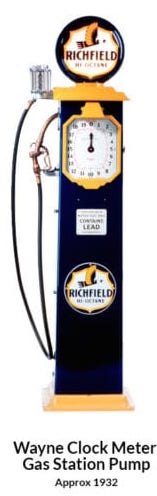 photo source: Saferack
The Wayne Clock Meter Station pump displays the preferred gas station pump style of the tardily 20s and early 30s. Unlike its predecessors, the pump's ticker was prominent, making it easier to read how much gas was going into the tank. Additionally, many of the previous pumps were powered through hand cranking, meaning that drivers had to physically motion the gas into their tank. This Wayne model, and others like it, eliminated this arduous task so gas pumped into the car via motorcar rather than a crank.
8. American Oil Visible Manus Creepo Pump
Year Designed: 1930
Designer: American Oil
Bonus Fact: The clear cylinder grew out of utilise effectually this time
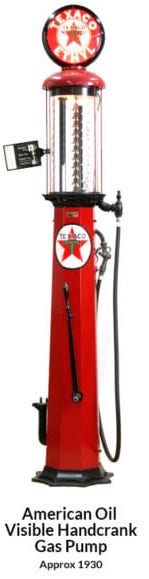 photo source: Saferack
This American Oil model is a standard example of the same drinking glass cylinder trend. From approximately 1918 until 1925, the visible cylinder fashion was the meridian of gas pump fashion. Some older models had visible cylinders attached to them while other gas pumps, like this American Oil one, were designed with the cylinders already attached. Unfortunately for American Oil, the clock style ticker had a resurgence in the mid-20s and was the nearly popular style of gas pump into the 1930s.
vii. Double Gas Pump
Yr Designed: 1927
Designer: Multiple
Bonus Fact: Users could refuel their automobile and aircraft simultaneously
 photo source: Artfactory.com LLC
This Canadian gas pump featured two clear cylinders, the dying trend at the fourth dimension, too equally a hand crank to distribute gas. Interestingly, this double pump could be used for cars as well equally small aircrafts, making it convenient for all sorts of vehicle operators. Additionally, because it is Canadian in origin, this sort of pump is quite rare and, therefore, a collector's item in the United states today.
6. Wayne Co. Roman Column Gas Pump
Year Designed: 1923
Designer: Wayne Co.
Bonus Fact: Information technology was part gas pump and office art piece
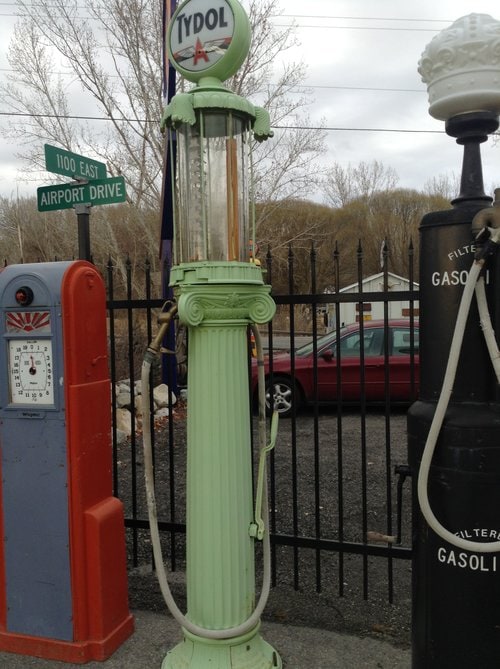 photo source: AAA Lakeside Storage Museum
Whoever thinks gas pumps are boring has another thing coming! This Wayne Roman Column gas pump takes the creativity and intricate designs featured in many vintage gas pumps to another level. The Roman Cavalcade gas pump interweaved classical blueprint with the typical gas pump features of the time—— clear cylinders, handcranks, and dangerous lead that maintained engine health because vintage pumps did not filter fuel. The name, however, is a bit of a misnomer every bit the column is more than Greek style than Roman.
5. Fry Visible Gas Pump: Model 117
Yr Designed: c. 1920
Designer: Fry Visitor
Bonus Fact: Nicknamed afterward actress Mae West
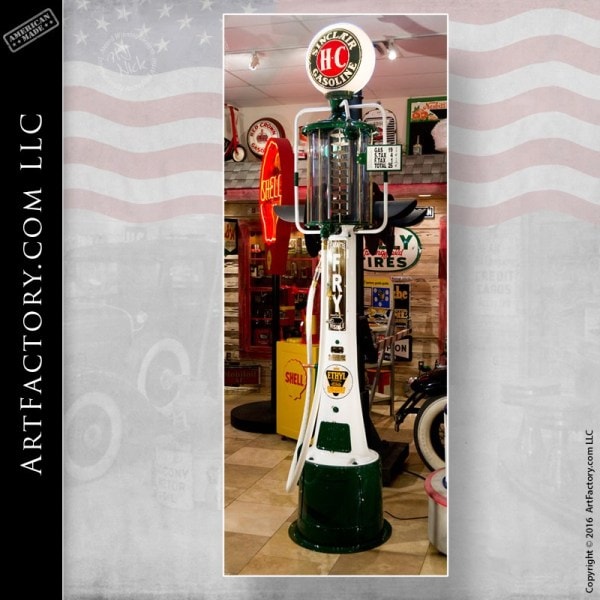 photo source: Artfactory.com LLC
The 1920s featured a lot of aesthetic innovations in gas pump design. This Fry gas pump had a articulate cylinder that immune users to measure the amount of fuel and see the overall quality of the gas, an important feature as gas was non filtered equally it is today. Additionally, the 117's curvy body led to its nickname "Mae West," afterward the popular actress.
4. Gilbarco Previsible Curbside Hand Crank Pump
Year Designed: 1920
Designer: Gilbarco
Bonus Fact: Much larger than previous gas pumps
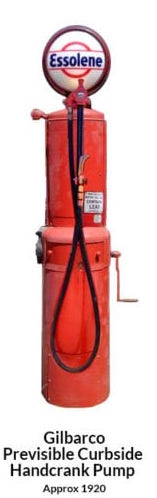 photo source: Saferack.com
The Gilbarco Previsible gas pump had a similar design to those earlier it, utilizing a ticker to determine how much gas would be put into a car'due south tank. Notwithstanding, this pump was much larger than the skinny poles from by years. Additionally, the ticker-mode pump had a momentary lapse in style. In 1918, the glass cylinder grew in popularity and replaced the ticker for a number of years equally the principal course of measurement for the gas pump.
three. Gilbert and Barker Gas Pump T-6
Year Designed: 1911
Designer: Charles Gilbert and James Barker
Bonus Fact: Included a ticker for precise measurement
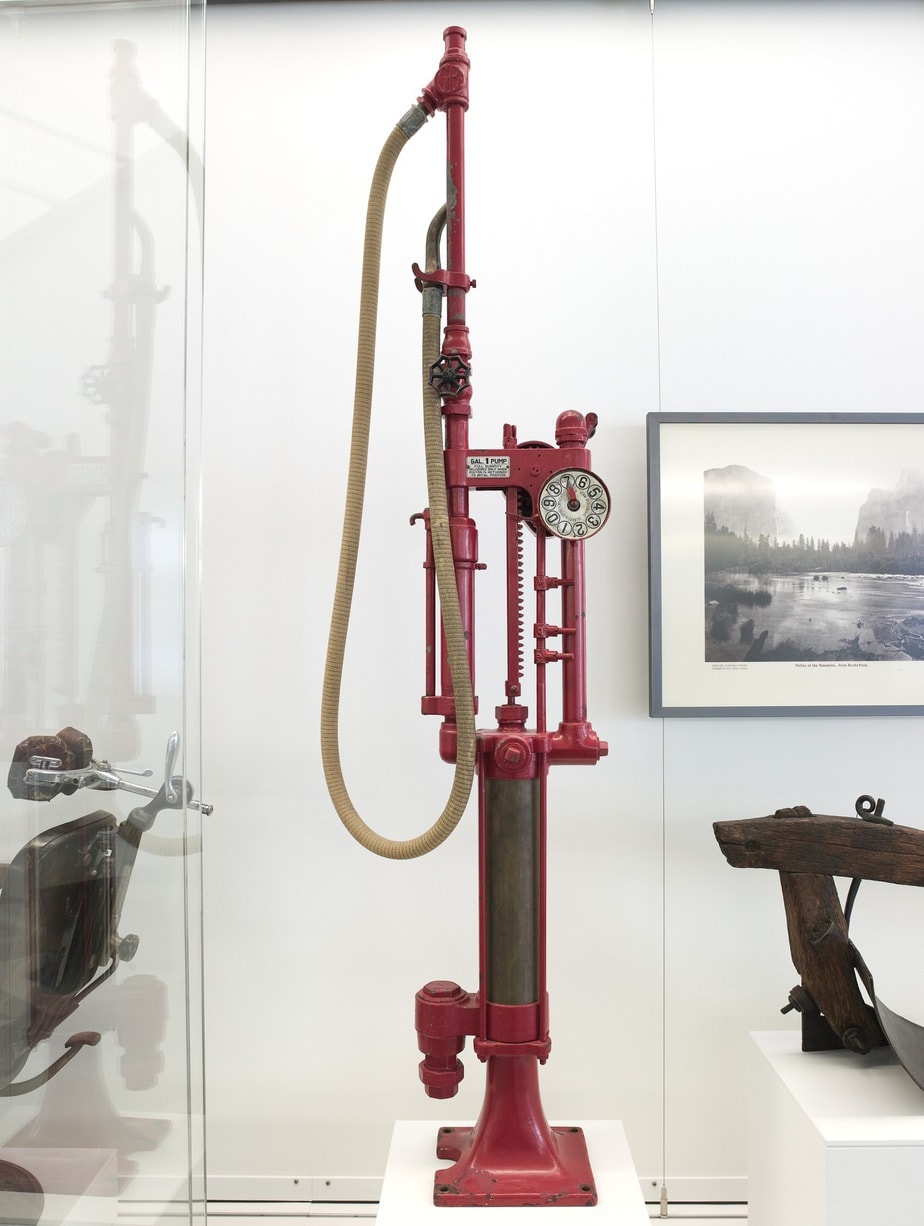 photo source: Smithsonian National Museum of American History
Every bit noted previously, motorists mostly carried around gas in unsafe containers to refuel their vehicles prior to the invention of Bowser's self measuring gas pump. Gilbert and Barker contributed to Bowser's innovation with their T-6 model, adding a drinking glass ticker that indicated the exact amount of gas distributed into the tank. Some form of this ticker would remain on gas pumps until the 1930s, when the figurer meter pump was invented.
2. Bowser Self Measuring Gas Pump
Year Designed: 1905
Designer: Sylvanus Bowser
Bonus Fact: Allowed users to determine how much gas they wanted
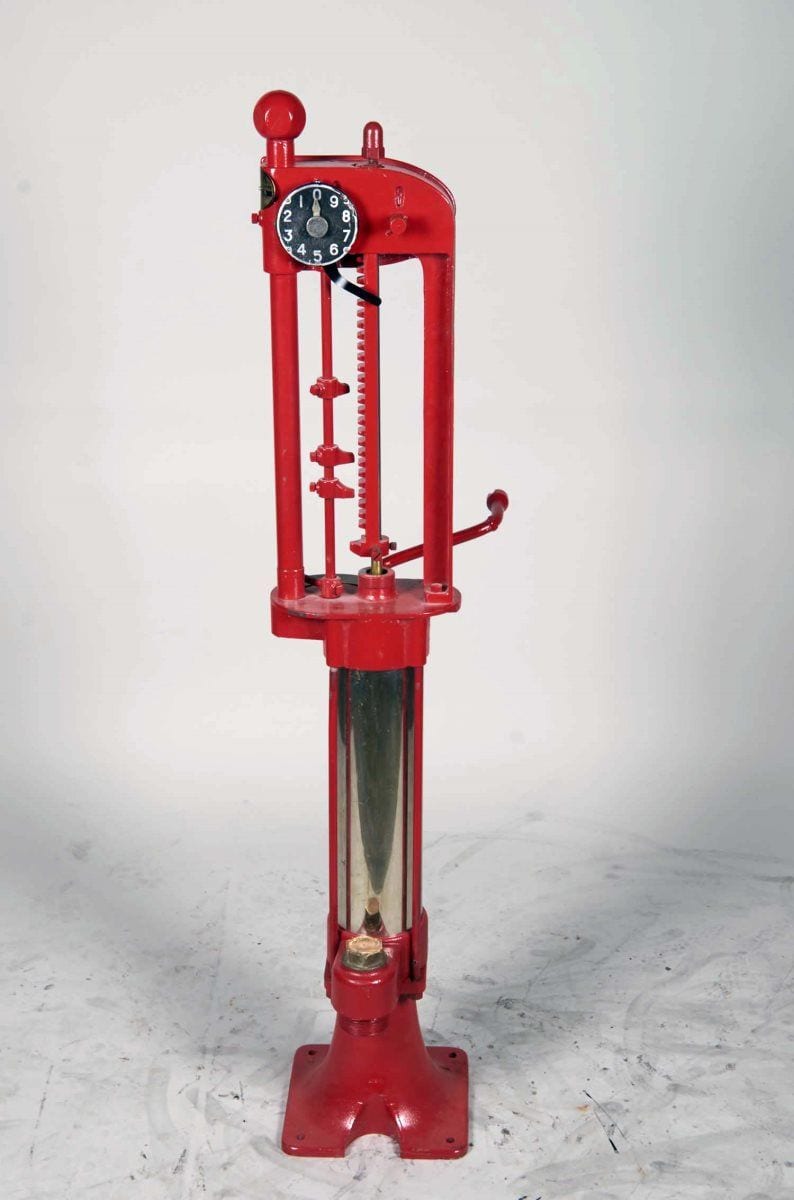 photo source: iCollector.com
After creating a kerosene gas pump for mutual household objects, Bowser had some other idea for improving gas. While motorists had the option to pump gas into their vehicles since 1900, these were mostly for filling upwardly containers, which risked spillage and fires. Bowser believed he could make the process more convenient. His new gas pump, this time intended for vehicles, featured a metal case inside a wooden cabinet with a forced suction pump users could put directly into their car. Most importantly, the pump included set stops that allowed the user to specify the amount of gas they wanted in their tanks.
1. Bowser Gasoline Pump
Year Designed: 1885
Designer: Sylvanus Bowser
Bonus Fact: Intended for household items, non cars
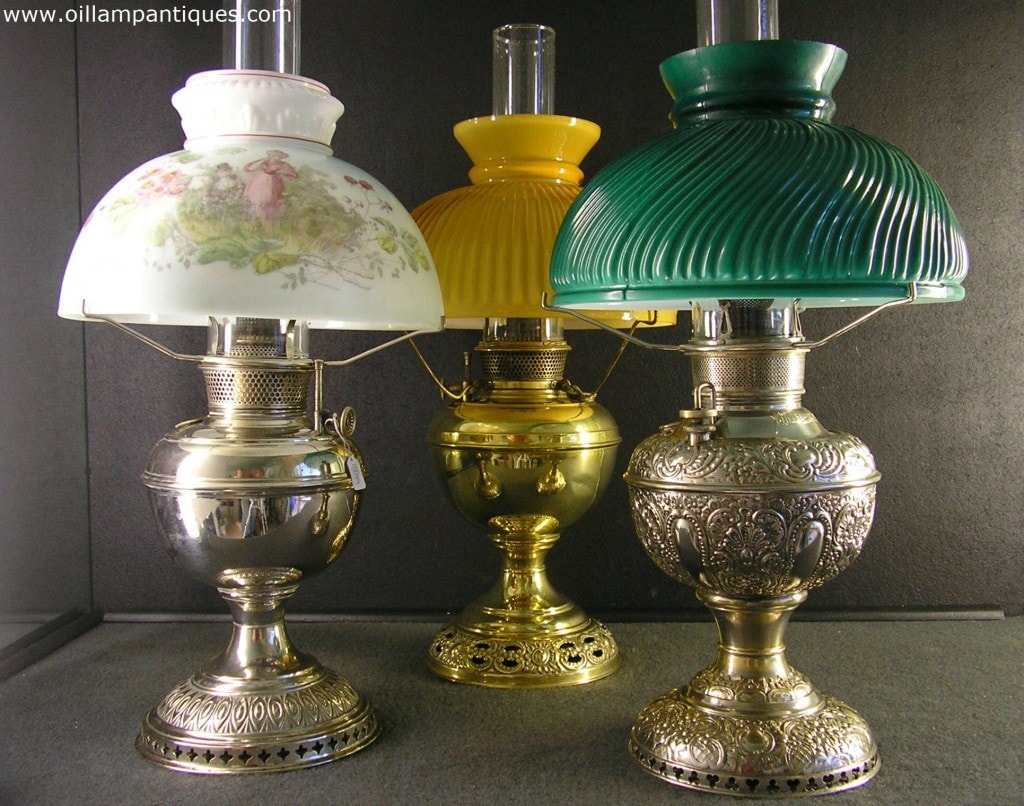 photograph source: oillampantiques.com
Sylvanus Bowser invented the first gas pump in 1885, before cars ever existed. Since people relied on gas to power their homes, they used Bowser'southward invention, which held refined kerosene, for their stoves and lamps. Unlike the metal gas pumps intended for cars most of us are familiar with, Bowser's first gas pump was fabricated mostly of wood. It included a wooden butt, wooden plunger, and marble valves. After patenting his pump in 1887, Bowser began Southward.F. Bowser and Co. which continued innovations in the gas pump manufacture.

Picture Of A Gas Pump,
Source: https://www.oldest.org/technology/gas-pumps/
Posted by: cuellarwinget.blogspot.com
0 Response to "Picture Of A Gas Pump"
Post a Comment